PA Bluestone AUCTION!

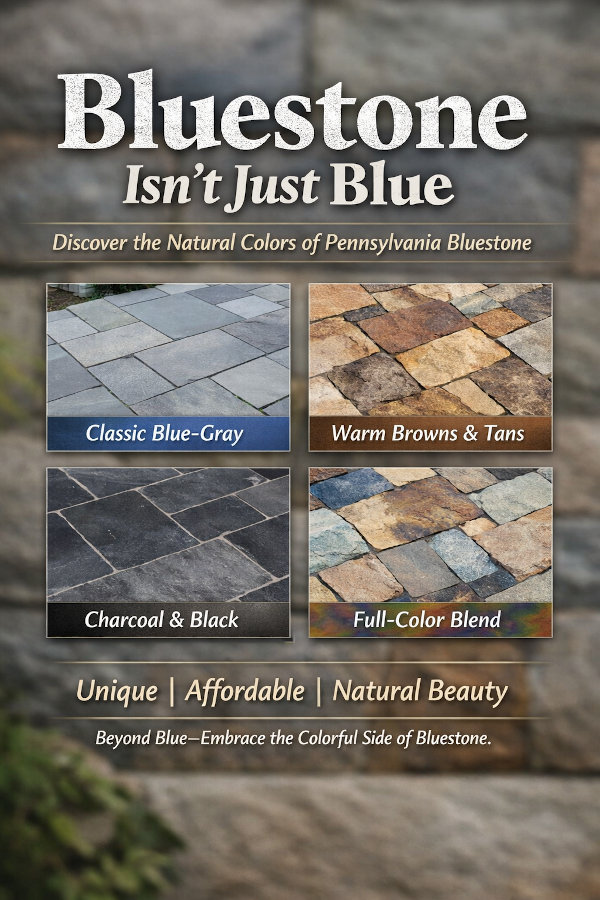
When most people hear Pennsylvania Bluestone, they picture the classic cool blue-gray slabs seen in patios, sidewalks, and historic streetscapes. While blue is the most recognized and widely specified look, true PA bluestone naturally occurs in a wide range of colors—many of which are overlooked, misunderstood, or even discounted.
For homeowners, designers, and stone lovers who appreciate character, variation, and value, full-color bluestone can be one of the most exciting choices available.
Why Bluestone Comes in Different Colors
Bluestone is a dense sandstone formed over millions of years. Its color is influenced by natural mineral content and geologic conditions—not dyes or treatments.
- Carbon-rich layers can contribute to darker charcoal or black tones.
- Iron oxides (Fe2O3) can create browns, rusts, tans, and warm earth hues.
- Lower iron content tends to produce cooler blues and blue-grays.
- Weathering & oxidation can subtly shift surface tones over time.
Many people notice this in real projects: darker patches often correlate with higher carbon areas, while brown tones are commonly associated with iron oxidation. The key point: these are natural, stable characteristics, not defects.
Beyond Blue: The Natural Color Range of PA Bluestone
Classic Blue & Blue-Gray
The most recognized look—cool, consistent, and widely specified for formal patios, sidewalks, and commercial work.
Brown & Tan Tones
Warm, earthy colors that blend beautifully with landscaping, historic homes, cabins, and rustic architecture.
Charcoal & Black Variations
Dramatic and bold. These tones often appear as accents or as part of a naturally mixed stone palette.
Full-Color / Natural Blend
A natural mix of blues, browns, grays, and darker inclusions—often the most visually interesting option because it reflects the stone’s natural formation.
What Is “Full-Color” or “Seconds” Bluestone?
Full-color bluestone (sometimes labeled as natural blend typically has:
- Greater color variation across each pallet or layer
- Possible iron staining or darker mineral inclusions
- The same core durability expected from quality bluestone
- Often a significantly better price point
One may also see the term "Seconds" used with bluestone. It is important to note: “Seconds” does not automatically mean weak or unusable stone. It may refer to the color falls outside narrow commercial grading standards—great news for buyers who want natural character and strong value.
Why Full-Color Bluestone Is a Smart Choice
For projects like sidewalks, garden paths, patios, and informal outdoor living spaces, full-color bluestone offers major advantages:
- Lower cost per square foot
- One-of-a-kind appearance with natural variation
- Hides dirt, stains, and wear beautifully over time
- Feels authentic—ideal for historic and rustic design styles
- Develops a timeless look as it weathers and integrates into the landscape
Design Tip: Let the Stone Be the Art
Instead of fighting variation, embrace it. A few simple techniques make a big difference:
- Dry-lay (test place) the stones first to preview the color balance.
- Rotate pieces to spread darker tones naturally across the layout.
- Use natural cleft texture to enhance shadows and depth.
- Think of iron and carbon features as natural character marks—part of the story.
Final Thought
Pennsylvania bluestone has never been just blue. It’s a geological canvas—shaped by time, pressure, minerals, and place. If you’re willing to look beyond uniform color, full-color bluestone delivers beauty, durability, and value that “blue-only” stone simply can’t match.