|
|
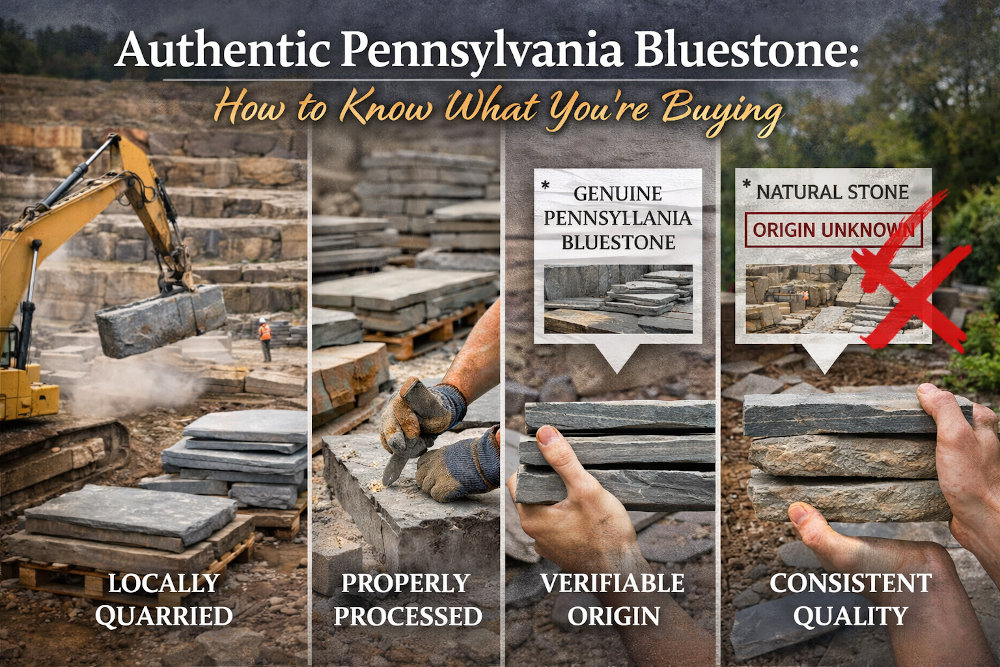
![]() Authentic Pennsylvania Bluestone: How to Know What You’re BuyingAuthentic Pennsylvania Bluestone has a reputation for durability, natural traction, and timeless beauty—especially in patios, walkways, steps, and commercial hardscape projects. But as demand has grown, so has the number of products marketed as “bluestone” that may differ in origin, density, appearance, and long-term performance. This guide explains what “authentic Pennsylvania bluestone” means, what to ask before you buy, and how to avoid costly surprises—especially for outdoor projects in freeze/thaw climates. What Makes Pennsylvania Bluestone “Authentic”?In simple terms, authentic Pennsylvania bluestone is natural stone quarried from bluestone-bearing layers traditionally sourced in Pennsylvania and nearby regional deposits. Because it is a natural material, it varies in tone and texture—but it is known for strength and reliable outdoor performance when properly selected and installed. Authenticity is about more than color. Two stones can look similar in a photo, yet behave differently over time depending on density, layering, absorption, and the way the material was processed and graded. Why “Bluestone” Can Mean Different Things“Bluestone” is commonly used as a general term in the market. Some suppliers may use it to describe:
That doesn’t automatically mean those products are “bad”—but it does mean you should confirm what you’re getting so expectations match the stone delivered to your site. Common Differences Between Authentic PA Bluestone and SubstitutesSubstitutes can differ in ways that matter for real-world projects:
How to Verify Authentic Pennsylvania BluestoneHere are practical checks that help confirm you’re buying genuine Pennsylvania bluestone from a reliable source: 1) Ask Where It Was QuarriedAuthentic suppliers can tell you the sourcing region and explain how the stone is extracted and processed. Quarry-direct or quarry-connected supply chains typically have better transparency than “stone broker” listings that only show photos and pricing. 2) Confirm Product Type and Intended UseThere are different bluestone products—flagstone, dimensional cut, treads, veneer—and they are not interchangeable. A good supplier will confirm your application first:
3) Understand Finish Options (Finish Impacts Safety)Finish isn’t just style—it affects traction and performance. Ask what finish is recommended for your environment:
4) Confirm Thickness Range and CoverageThickness consistency affects installation time, cost, and final appearance. Ask for the thickness range and how coverage is estimated. For example, natural cleft material often varies; dimensional products are typically more consistent. 5) Ask About Grading and SortingProfessional bluestone supply includes sorting and grading by thickness, size, color range, and surface character. That means fewer surprises on the job site and a better-looking finished project. 6) Request Real Photos (Not Just Catalog Images)Because bluestone is natural, real pallet photos (or quarry photos) help you understand what you will actually receive—especially for color blends and natural cleft character. Signs You’re Getting Quarry-Grade, Project-Ready MaterialIf you want confidence in your purchase, look for these “green flags”:
Choosing the Right Pennsylvania Bluestone for Your ProjectTo help match you with the right stone, it’s helpful to know:
Talk With a Quarry-Connected Team Before You BuyIf you’re investing in Pennsylvania bluestone, a quick conversation upfront can help ensure you get the right material for the job—saving time, installation cost, and avoiding mismatched expectations. Next step: Contact us and tell us about your project (use, square footage, desired finish, and timeline). We’ll help confirm the best authentic Pennsylvania bluestone options for your needs.
|