|
|
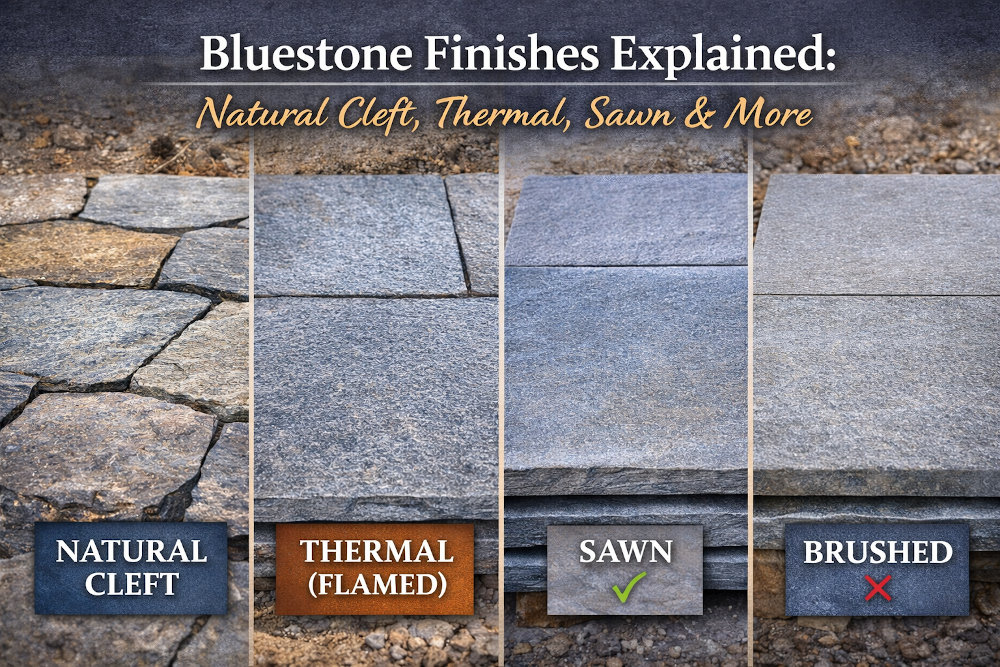
![]() Bluestone Finishes Explained: Natural Cleft, Thermal, Sawn & MoreThe finish applied to Pennsylvania bluestone plays a major role in both appearance and performance. Beyond aesthetics, finish selection affects traction, durability, maintenance, and how well the stone performs in different environments. This guide explains the most common bluestone finishes, where they are used, and how to choose the right finish for your project. Why Bluestone Finish MattersChoosing the right finish ensures your bluestone not only looks great on installation day, but continues performing safely and beautifully for decades. The finish influences:
Natural Cleft BluestoneNatural cleft is the traditional bluestone finish created when the stone is split along its natural layers. Characteristics:
Best used for:
Natural cleft bluestone is one of the most popular finishes due to its timeless appearance and functional performance in outdoor environments. Thermal (Flamed) BluestoneThermal bluestone is produced by applying intense heat to the stone surface, causing small flakes to break away and creating a uniform, slip-resistant texture. Characteristics:
Best used for:
Thermal finishes are often preferred where safety and uniformity are priorities. Sawn BluestoneSawn bluestone is cut with diamond saws to produce a flat, smooth surface. Characteristics:
Best used for:
Important note: For exterior walking surfaces, sawn bluestone should typically be paired with a secondary texture (such as thermal or brushed) to ensure adequate slip resistance. Brushed & Sandblasted BluestoneThese finishes modify the surface to create a refined, uniform texture without the dramatic roughness of natural cleft or thermal finishes. Characteristics:
Best used for:
Honed BluestoneHoned bluestone is ground to a smooth, matte surface. Characteristics:
Best used for:
Honed finishes are generally not recommended for exterior walking surfaces unless treated with anti-slip treatments. Choosing the Right Finish for Your ProjectTo select the best bluestone finish, consider:
Matching the finish to the application is critical for safety, performance, and long-term satisfaction. Why Finish Selection Should Be Done EarlyFinish selection impacts:
Deciding early helps avoid redesigns and delays later in the project. Get Guidance on the Best Finish for Your ProjectIf you’re unsure which bluestone finish is best for your application, a quick conversation can save time, money, and prevent installation issues. Next step: Contact us with your project details and we’ll help you match the right Pennsylvania bluestone finish to your design and performance needs.
|