• About
    • Johnson Quarries
    • PA Bluestone
    • Bluestone Authenticity
    • Bluestone Finishes
    • Bluestone Thickness Guide
    • Bluestone Quarry Process
    • Project Ideas & Applications
    • Why Buy Bluestone Direct
    • Bluestone FAQ
  • Natural Stone
  • Thermal Stone
  • Aggregates
  • Transport
  • Applications
  • AUCTION


Support our Military Members
Send A Care Package Today

Johnson Quarries ..Jerry Johnson & Son ..PA Blue Stone

Star See AUCTION Items!

bluestone05.jpg

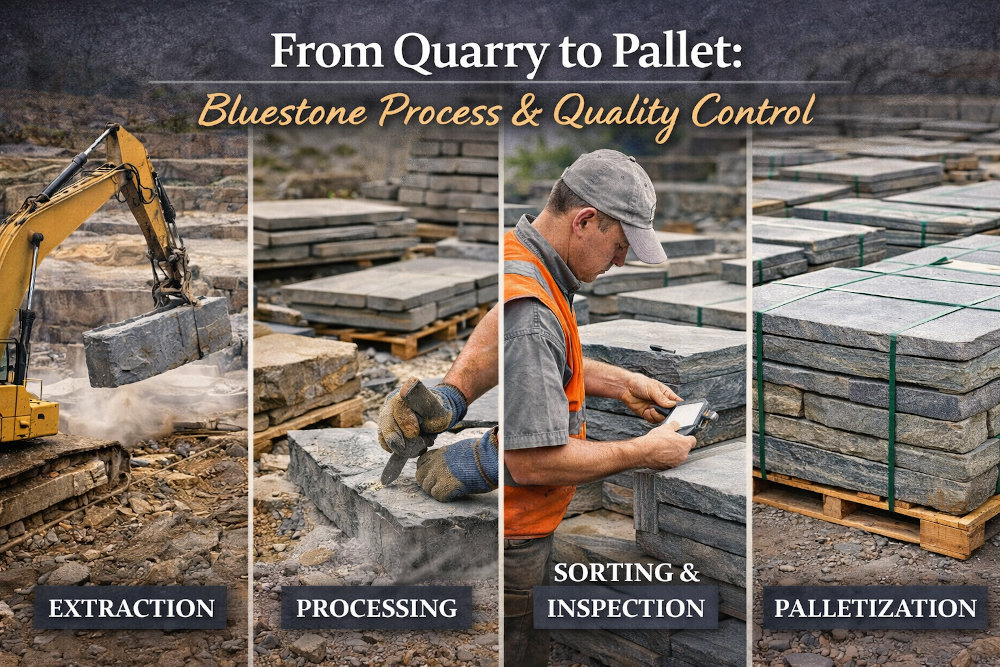
From Quarry to Pallet: Bluestone Process & Quality Control

The quality of Pennsylvania bluestone begins long before it reaches a job site. It starts at the quarry, where careful extraction, sorting, and finishing determine how the stone will perform and look for decades to come.

This page explains the quarry-to-delivery process and how quality control ensures your bluestone meets both visual and structural expectations.

Step 1: Responsible Stone Extraction

Bluestone is quarried from natural sedimentary layers formed over millions of years. Each layer has its own characteristics, including color range, density, and cleft behavior.

At the quarry, experienced operators:

  • Select viable stone layers based on strength and consistency
  • Extract blocks carefully to preserve structural integrity
  • Avoid over-fracturing that can weaken the stone

This initial selection is critical. Poor extraction practices can compromise even high-quality stone before it ever reaches processing.

Step 2: Splitting & Cutting the Stone

Once removed from the quarry face, bluestone is processed depending on its intended use:

  • Natural cleft flagstone is split along natural layers, preserving texture and traction
  • Dimensional stone is cut to specific sizes for patios, steps, treads, and architectural elements
  • Veneer stone is cut thinner for wall applications

Proper splitting and cutting ensure each piece maintains its strength and intended thickness profile.

Step 3: Sorting & Grading

Not all stone that comes from the quarry is identical—and that’s expected with a natural product. This is where sorting and grading become essential.

Stone is grouped by:

  • Thickness range
  • Size and shape
  • Color range and blend
  • Surface character (natural cleft, uniformity, edge condition)

Grading ensures that when stone arrives at your project, it installs consistently and meets visual expectations.

Step 4: Finishing Processes

Depending on the application, bluestone may receive additional surface finishing:

  • Thermal (flamed) – heat-treated for consistent texture and traction
  • Sandblasted or brushed – refined surface with uniform appearance
  • Sawn or honed – smooth, modern finishes for architectural use

Each finish is selected based on safety, aesthetics, and project requirements—not simply appearance.

Step 5: Quality Control at Each Stage

Quality control isn’t a single step—it happens throughout the entire process.

  • Stone is inspected after extraction for fractures or weakness
  • Thickness is checked during splitting and cutting
  • Finish consistency is monitored during surface treatment
  • Sorting ensures pallets contain uniform, project-ready material

This layered approach prevents inconsistent shipments and reduces on-site waste and installation issues.

Packaging, Palletizing & Delivery

After processing, bluestone is palletized for safe transport and predictable coverage.

Professional packaging ensures:

  • Minimized breakage during shipping
  • Consistent square footage per pallet
  • Efficient unloading and handling on site

Proper palletization is part of quality control—it ensures the stone arrives in the same condition it left the quarry.

Why Quarry-Direct Supply Matters

Working with a quarry or quarry-connected supplier provides advantages that resellers often cannot:

  • Transparency about stone origin
  • Direct oversight of grading and sorting
  • Better consistency between orders
  • Accurate product recommendations
  • Faster resolution if questions arise

This connection to the source allows better matching of stone to your specific project needs.

How This Benefits Your Project

A controlled quarry process and quality system results in:

  • Fewer surprises during installation
  • Better visual consistency
  • Improved long-term durability
  • Lower risk of callbacks or repairs

In short: better stone leads to better outcomes.

Talk With Us About Your Project

If you’re planning a Pennsylvania bluestone project, understanding how your stone is sourced and processed helps ensure success from the start.

Next step: Contact us to discuss your project goals, and we’ll help match the right bluestone material to your application, finish, and timeline.

Product Catalog Aggregates Brochure Locations Contacts

johnsonquarries.com

Home Contact