|
|
 PA Bluestone AUCTION!

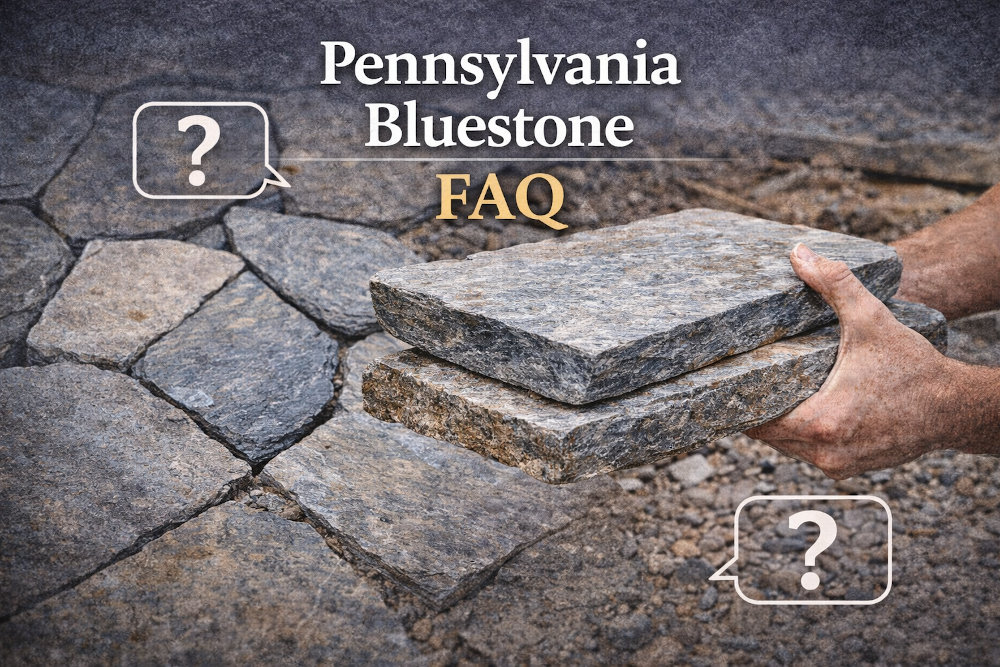 Pennsylvania Bluestone FAQ – Common Questions AnsweredThis FAQ answers some of the most common questions homeowners, contractors, and designers ask when considering Pennsylvania bluestone for residential and commercial projects. What is Pennsylvania bluestone?Pennsylvania bluestone is a natural stone quarried primarily in Pennsylvania and surrounding regions. It is known for its strength, natural traction, and range of blue-gray, steel, lilac, and earth-toned colors. It is commonly used for patios, walkways, steps, pool decks, and architectural stonework. Is all bluestone the same?No. “Bluestone” is often used as a general term, but not all bluestone is quarried in Pennsylvania or has the same geological properties. Authentic Pennsylvania bluestone typically offers better performance in freeze/thaw climates and more consistent long-term durability. How can I tell if bluestone is authentic Pennsylvania bluestone?Ask where the stone was quarried, how it was processed, and whether the supplier can provide quarry-level sourcing information. Quarry-direct or quarry-connected suppliers typically offer the highest transparency. What is the best finish for outdoor bluestone?Natural cleft and thermal (flamed) finishes are most commonly recommended for outdoor walking surfaces due to their slip resistance and durability. Sawn or honed finishes are typically better suited for architectural or interior applications. Is bluestone slippery when wet?When properly finished, Pennsylvania bluestone offers excellent traction. Thermal and natural cleft finishes perform particularly well around pools and in wet environments. What thickness should I use for bluestone?Thickness depends on the application:
Does bluestone require sealing?Sealing is not always required, but many homeowners choose to seal bluestone to enhance color, reduce staining, and simplify maintenance. Sealers should be selected based on the intended appearance and environmental exposure. How does bluestone perform in freeze/thaw climates?Authentic Pennsylvania bluestone performs very well in freeze/thaw regions when properly installed with adequate base preparation and drainage. It is widely used throughout the Northeast for this reason. Can bluestone be used for pool decks?Yes. When finished appropriately (typically thermal), bluestone is a popular choice for pool decks due to its traction, durability, and ability to remain cooler underfoot compared to many manufactured materials. What color options are available?Bluestone naturally varies in color depending on the quarry layer and blend. Common tones include blue-gray, steel, charcoal, lilac, tan, and full-range blends. Color variation is part of bluestone’s natural character. Is bluestone suitable for commercial projects?Yes. Pennsylvania bluestone is commonly used in plazas, walkways, public spaces, and building entries due to its durability and aesthetic appeal. Dimensional and thermal finishes are often selected for high-traffic areas. How much bluestone do I need for my project?The amount depends on square footage, layout, joint spacing, thickness, and waste allowance. A quarry-connected supplier can help calculate accurate coverage based on your specific project. Is bluestone more expensive than concrete pavers?Bluestone typically has a higher initial material cost than manufactured pavers, but it often provides better long-term value due to durability, appearance, and longevity. Why should I buy bluestone directly from a quarry?Buying quarry-direct offers better quality control, transparency of origin, more consistent supply, and more accurate product recommendations—leading to better overall project outcomes. Can bluestone be used indoors?Yes. Bluestone can be used for interior flooring, wall cladding, and fireplaces when properly finished and sealed, especially in architectural or contemporary designs. How do I get started with a bluestone project?Start by identifying your project type (patio, steps, veneer, etc.), approximate size, and preferred style. Then consult with a quarry-connected supplier to match the right stone, thickness, and finish to your needs. Have More Questions?If you don’t see your question here, we’re happy to help. Next step: Contact us with your project details and we’ll guide you through selecting the right Pennsylvania bluestone for your application.


Accessibility
Text size
|