|
|
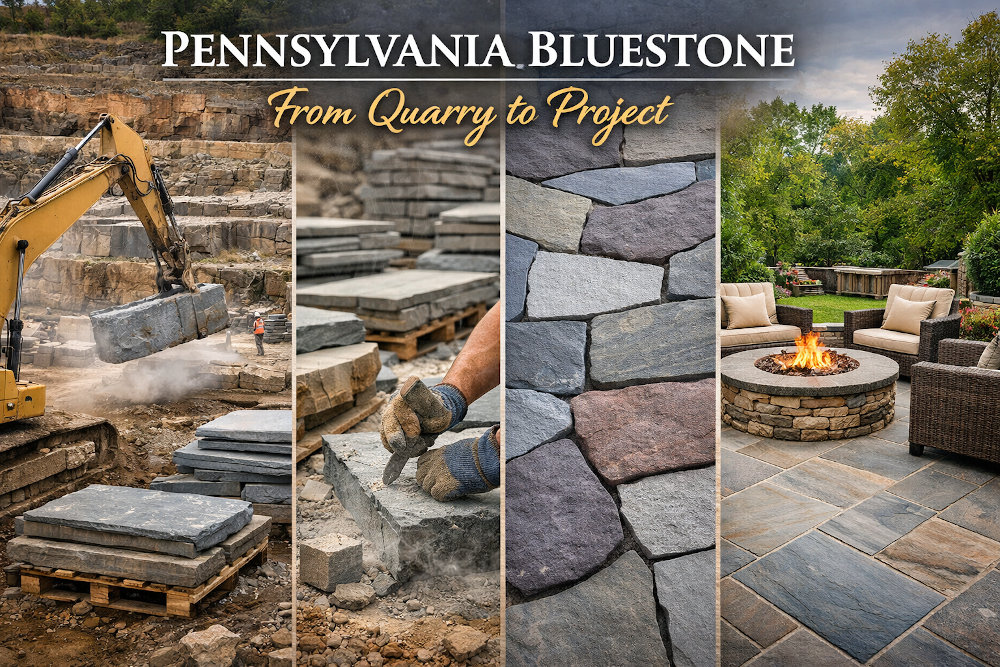
![]() Pennsylvania Bluestone – From Quarry to ProjectPennsylvania Bluestone is one of the most trusted natural stones used for patios, walkways, steps, pool surrounds, and architectural stonework across the Northeast and beyond. Known for its durability, rich color range, and timeless texture, true Pennsylvania bluestone is prized by homeowners, landscape professionals, masons, and commercial builders who want a surface that performs for decades and looks better with age. What Is Pennsylvania Bluestone?Pennsylvania bluestone is a dense, naturally cleft sandstone (and related sedimentary stone layers) historically quarried in Pennsylvania and nearby regions. It’s recognized for its strength, slip resistance, and natural color tones—often blue-gray, steel blue, charcoal, lilac, tan, and earth blends—depending on the vein and quarry source. When people search “Pennsylvania bluestone,” they are often looking for a stone that is authentic, long-lasting, and suitable for outdoor use in freeze/thaw climates. That combination—beauty plus performance—is why it remains a top choice for landscape and building projects. Geology & Origin: Where Bluestone Comes FromPennsylvania bluestone forms from ancient sedimentary deposits that were compressed over long periods of time, creating strong, workable stone layers that can be split, cut, and shaped for different uses. Because bluestone is a natural material, each layer and block can vary slightly in tone and character—one of the reasons real quarry-sourced bluestone looks more authentic and “alive” than imitation products. Quarry location, vein depth, and the specific stone layer all influence the stone’s color, density, and natural cleft texture. That’s also why quarry-direct supply is so valuable: you’re sourcing from known material with consistent quality control. Authenticity: Real Pennsylvania Bluestone vs SubstitutesNot all “bluestone” is the same. Some products marketed as bluestone may be sourced outside Pennsylvania, may be different sandstone types, or may be imported stone with a similar look. Substitutes can still be useful in certain applications, but they may differ in density, weathering, slip resistance, and long-term performance. If your goal is a genuine Pennsylvania bluestone project, look for:
Common Uses for Pennsylvania BluestonePennsylvania bluestone is extremely versatile. It can be used as a natural cleft “flagstone” for organic, rustic installs, or precision-cut for clean, modern lines. Popular applications include:
Finishes, Thicknesses, and GradesChoosing the right finish and thickness matters. It impacts safety, appearance, installation style, and long-term durability. Finish Options
Thickness Guidance
GradesBluestone may be sorted by thickness consistency, color range, and cleft character. A good supplier will explain grade options clearly so you can match the stone to the style and expectations of your project—rustic, natural variation vs. tighter color and dimensional consistency. From Quarry to Project: Process & Quality ControlA quarry-direct approach allows for hands-on quality control at each stage:
This process matters because stone is not a “one-size-fits-all” product. The best results come when the material selection matches the application and installation method. Planning Your Bluestone ProjectTo help you choose the right Pennsylvania bluestone, it’s helpful to know:
If you’re not sure where to start, a quick conversation can save time and cost by matching the right stone to the job from the beginning. Explore Supporting PagesThis pillar page is the starting point. For more detail, explore these supporting resources:
Request Pennsylvania Bluestone for Your ProjectLooking for quarry-sourced Pennsylvania bluestone for a residential or commercial project? Reach out with your project goals, approximate measurements, and desired finish, and we’ll help you identify the best stone options for your timeline and budget. Next step: Contact us to discuss availability, finishing options, and delivery for your location.
|